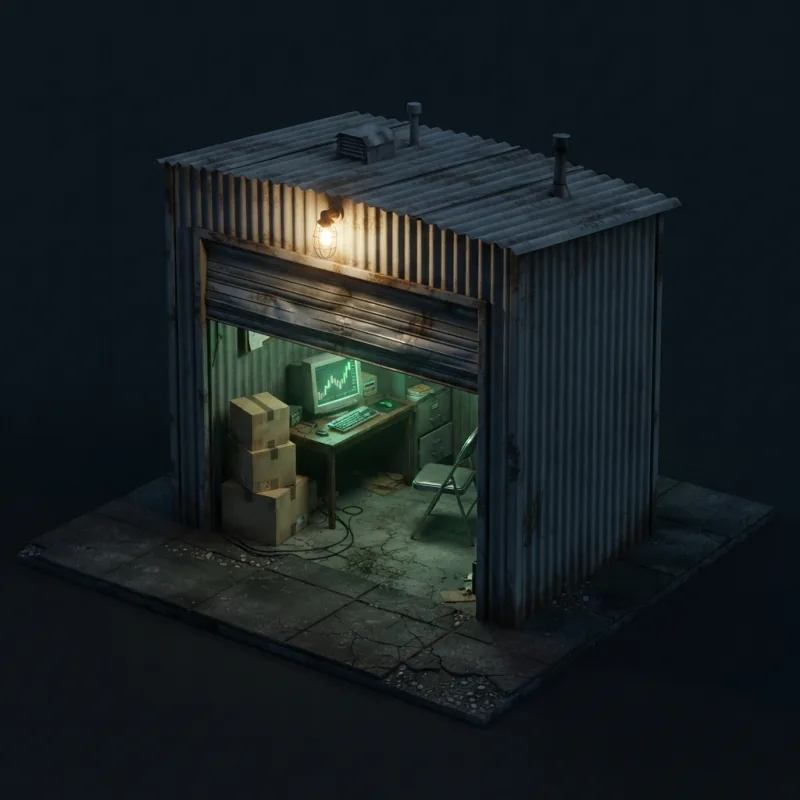
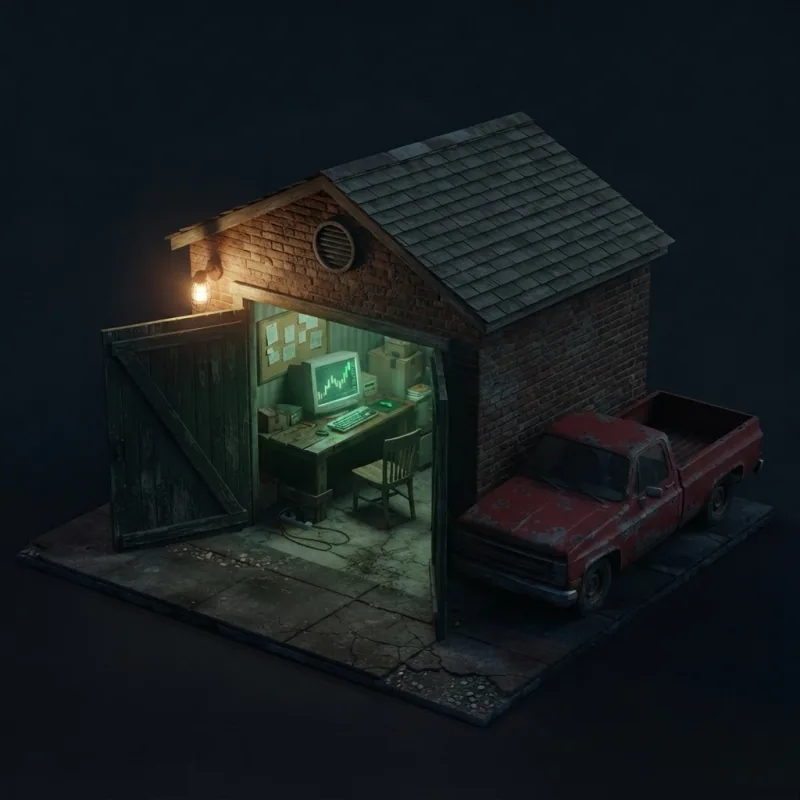
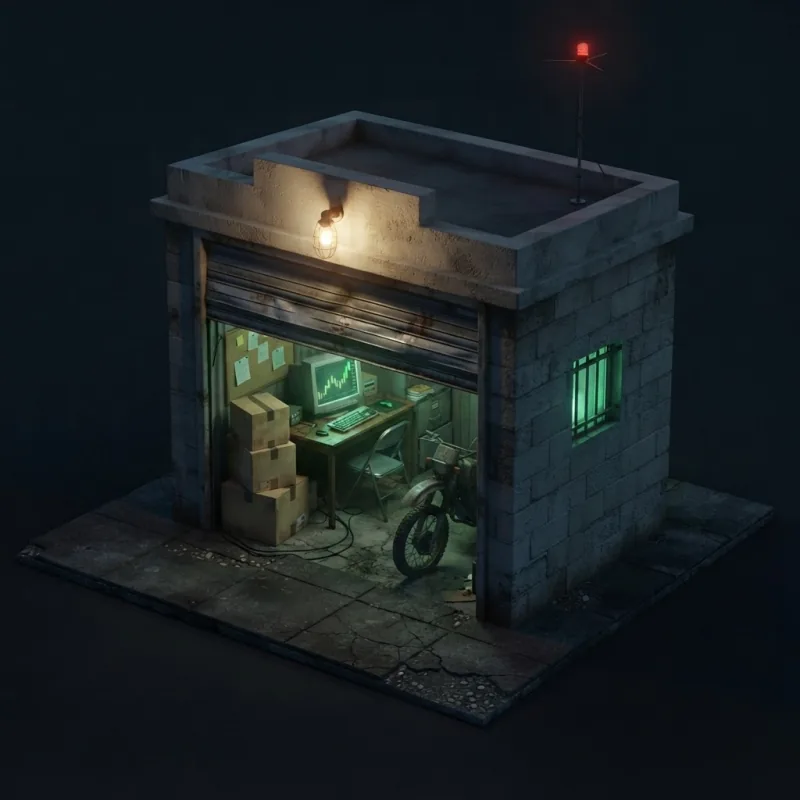
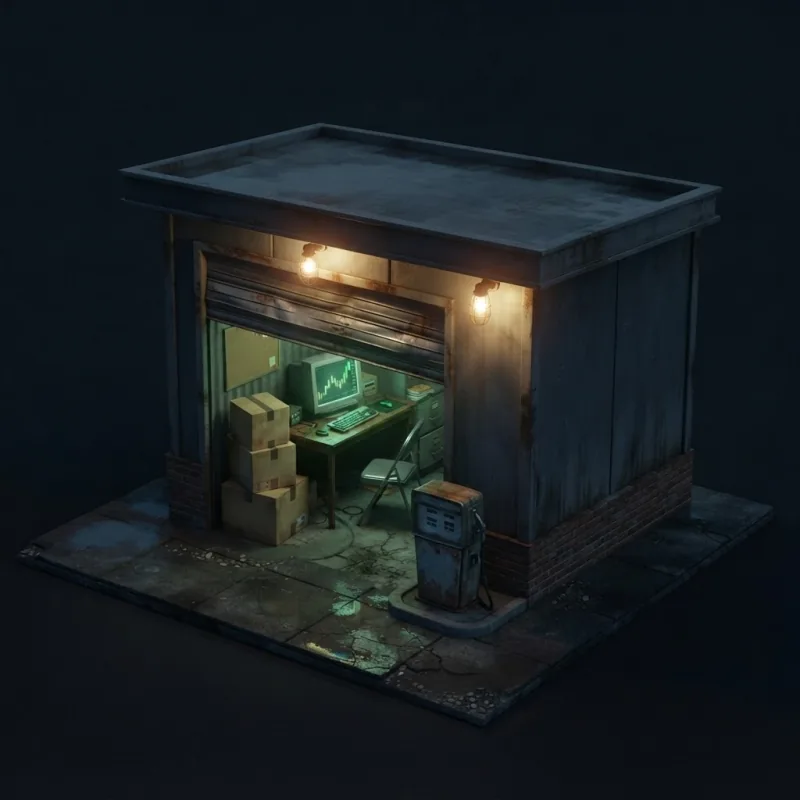
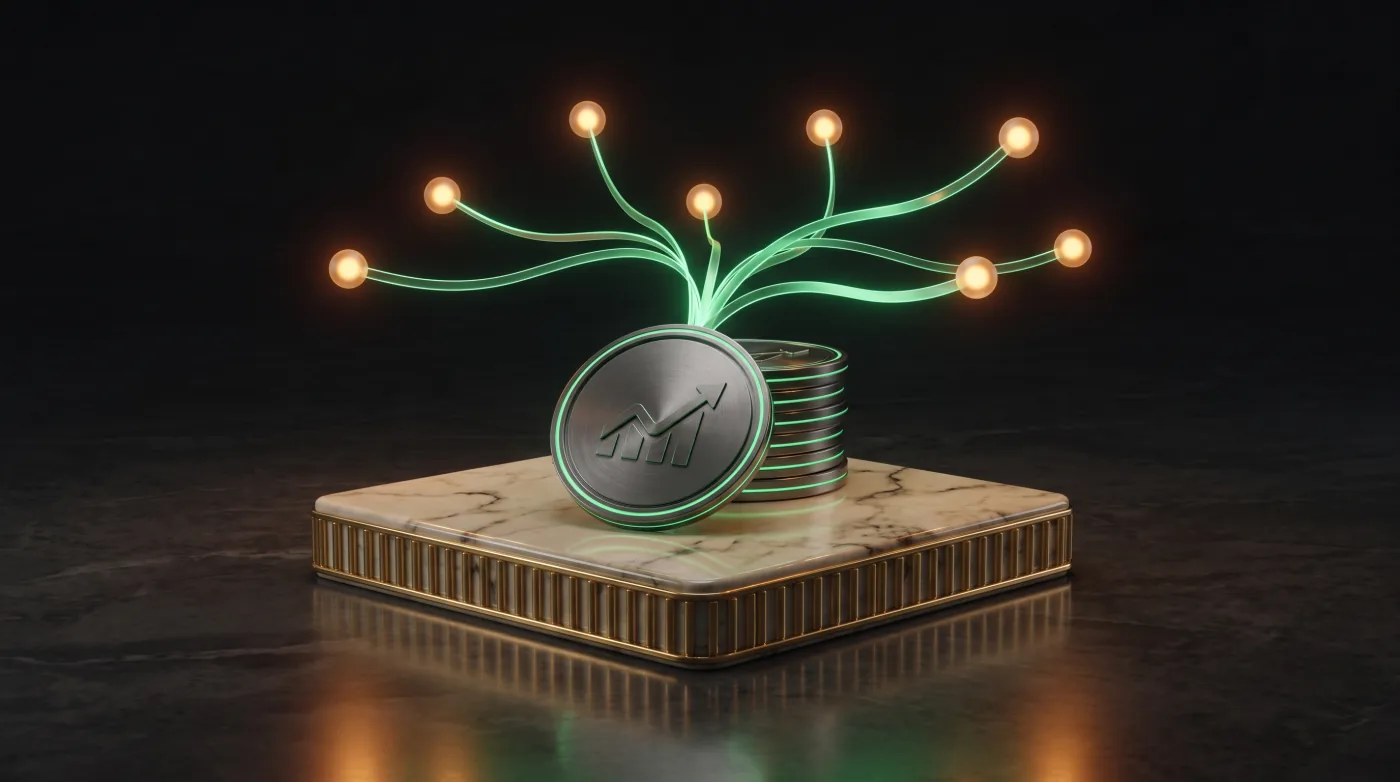
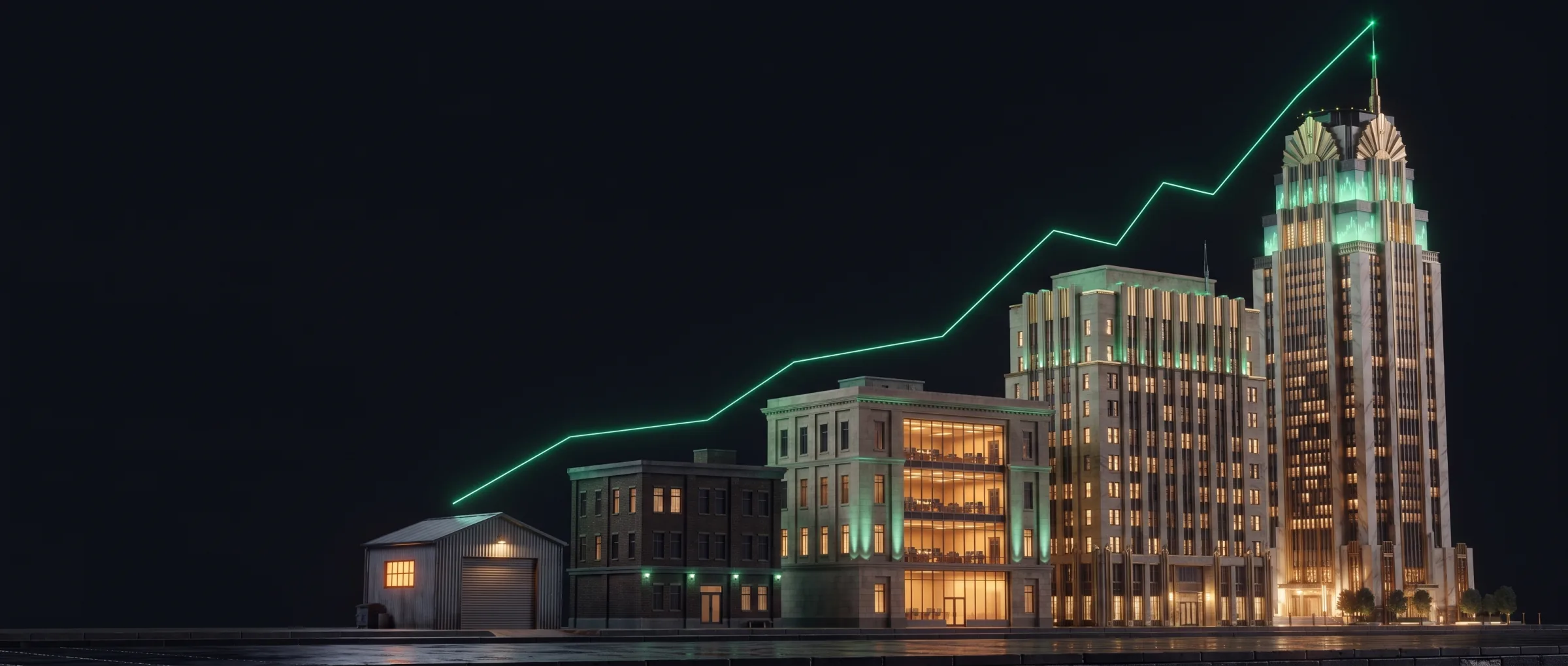
Every Building starts as a garage. Merge two of the same tier and climb five floors of weight. The contract takes secondary-sale royalties, buys tokenized stocks — AAPL, NVDA, MSFT, TSLA, SPY — and streams them to active holders — every second, on-chain, no server in the loop.
Every Genesis Building is a Tier 1 Garage. No rarity roll — the only economic parameter is the tier. Art inside a tier is cosmetic.
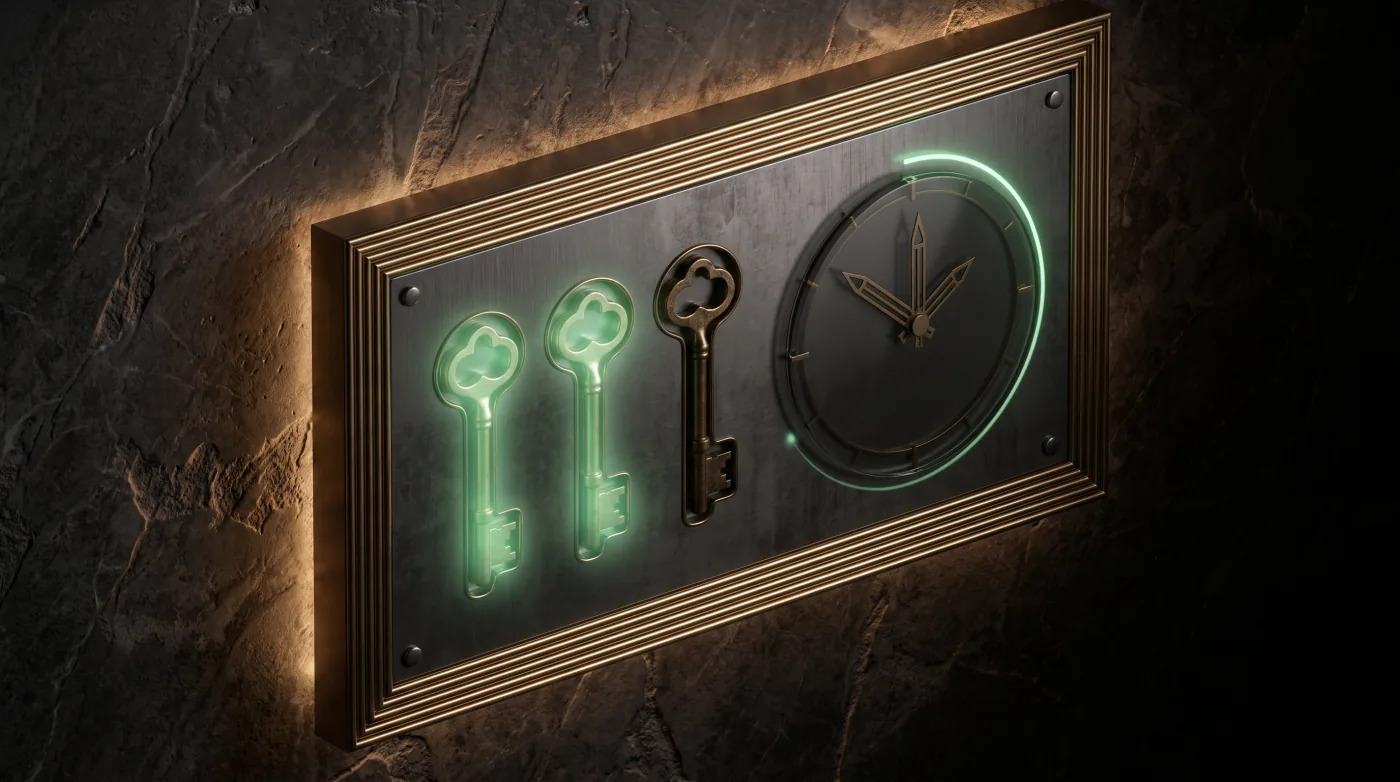
Buy $BONDS on the market and burn it to switch your Building on. Inactive Buildings earn nothing. Any transfer switches a Building off.
Two Buildings of the same tier + a $BONDS burn = one Building of the next tier. Supply shrinks, weight compounds.
The contract buys tokenized stocks with royalties and streams them by weight. Claim all assets in one transaction, whenever you like.

Weights are immutable contract constants (integer ×10: 10 / 22 / 50 / 115 / 265). Rewards split pro-rata by weight among active Buildings only.


Drag to compare holding garages separately against merging them all the way up. Every merge burns one NFT and a fixed $BONDS tariff.
Day or night is a cosmetic trait rolled from the tokenId — it never touches rewards. Only the tier does. One full ladder in each skin, then a handful of Genesis garages: every one is built differently, every one weighs 1×.


No treasury discretion, no dashboard promises. Revenue hits a router, the router splits, a keeper buys stocks under hard caps, and the pool streams them to active Buildings by weight. Every number here is a contract parameter, not a policy.
The keeper runs hourly, 24/7 — tokenized stocks trade on-chain around the clock, and TWAP and slippage caps insure the thin hours. Dividends or airdrops that land on stocks held in the pool are swept, permissionlessly, back into the same split path.

Rewards are paid in tokenized U.S. equities — on-chain tokens backed 1:1 by the real shares. An example basket and its purchase weights below; the live allow-list and weights are set by the admin and shown in the dApp.
Illustrative basket. Up to 10 assets stream at once · rebasing assets excluded · added assets warm up 24–48h · holders receive every asset pro-rata by weight, not a choice.
Secondary-sale royalties from OpenSea and the creator-fee share from $BONDS trading on Pons. Future modules plug in as adapters behind the timelock.
Immutable receiver. Unwraps WETH, sweeps ERC-20 royalties, splits every inflow by a timelocked vector.
Converts to the target stable and buys allow-listed tokenized stocks under per-tx and daily caps, minOut and optional TWAP checks. Output can only go to the pool.
Each purchase becomes a per-second rate over a 3-hour window. Accrual is lazy math on-chain, proportional to tier weight among active Buildings. Empty pool? The clock stops — nothing leaks.
All assets in one transaction. Unclaimed rewards travel with the NFT on sale; the buyer claims without reactivating.
No role can pause claims or transfers — only stock purchases can be paused. The single outflow guard is a public 24h rate-limit with an immutable floor: an anti-hack brake, not a freeze lever.
The indexer only displays. Rates, weights and pending balances live in the contract; the site ticks locally and the contract settles at claim.
At most ten assets stream at once; the admin picks the allow-list and purchase weights, holders never choose. Added assets warm up 24–48h before the first buy; removals are instant.
FloorStreet is deployed in partnership with Robinhood Chain — Robinhood's EVM L2, where tokenized stocks trade on-chain around the clock and where every contract of the ladder lives — and developed in partnership with Falcon Finance — the universal collateralization infrastructure behind USDf, an overcollateralized synthetic dollar, and sUSDf, its yield-bearing form. Falcon backs the project, and its collateral engine already accepts tokenized stocks. That closes the loop: the stocks this contract streams to you can become liquidity and yield on Falcon without ever selling the shares.

Your accrued tokenized stocks leave the pool into your wallet. One transaction, every asset.
Each token is a digital certificate for one real share, held by regulated, segregated, bankruptcy-remote custodians (tokenized by Backed).
Deposit eligible stocks as collateral and mint USDf against them. Falcon's own example: 30 TSLAx → roughly 10,000 USDf. You keep the upside of the shares.
Stake USDf into sUSDf. Yield comes from Falcon's diversified strategies — cross-exchange and basis arbitrage, options, funding — on top of the stocks, not from them.
Lock sUSDf for a fixed term to amplify returns, or route USDf back into the ladder: $BONDS, activations, merges.
Post NVDAx, SPYx or TSLAx from your claims as collateral and mint USDf. The shares stay yours — dividends, upside and all — while the dollars go to work. Falcon applies roughly 20% overcollateralization to equities.
sUSDf earns from a diversified set of market-neutral strategies: cross-exchange arbitrage, spot–perp basis, statistical arbitrage, an options portfolio and funding-rate farming. Yield is independent of whether your stocks go up or down.
Lock sUSDf for a fixed term to amplify returns above the base staking yield. Longer commitment, higher rate — set by Falcon, visible before you lock.
Mint USDf against claimed stocks → buy $BONDS → activate or merge → higher weight → more stocks streamed → more collateral. It is leverage: watch Falcon's collateral ratio, because a falling stock can trigger liquidation.
Falcon's Classic Mint starts at 10,000 USDf, above what a single Garage earns quickly. We are exploring a FloorStreet vault that aggregates holders' claims into one Falcon position and streams sUSDf back pro-rata. Nothing committed yet.
The 15% LP and 5% treasury buckets could sit in Falcon vaults behind the 48h timelock instead of idling. And if the tokenized-stock gate fails, USDf is a candidate fallback reward asset — a manifest change, not a code change.
Robinhood Chain and Falcon Finance are independent platforms; neither issues, endorses or guarantees FloorStreet rewards. Collateral eligibility, overcollateralization ratios, minimums and yields are set by Falcon, change over time, and require KYC on Falcon; Falcon's tokenized-stock products are available to institutional investors and qualified, verified retail investors in jurisdictions where tokenized equities are recognized. Nothing here is a guarantee of yield. FloorStreet's reward asset list is chosen by the collection's admin under the contract's allow-list rules and may differ from Falcon's collateral list. Figures quoted from falcon.finance as of November 2025.

Plain ERC-20 with Permit. No transfer tax, no admin functions, no minting — ever. Supply is fixed at launch on Pons and only ever burns. There is no activation reserve: every burn is bought on the open market.
Activation tariffs and the distribution table are finalized by the financial model before TGE. Activations open only after TGE — there is nothing to burn before the token exists.
The core contracts are deployed once, without proxies, and never upgraded. What can change is listed below — and each change has a speed limit that matches its blast radius.

The keeper is a hot key with one power: buy allow-listed assets into the pool, within caps. A compromised keeper means downtime, not loss. Deployment is a single scripted run — manifest, deploy, verify, hand every role to Safe and Timelock, renounce the deployer, check every parameter.
SeaDrop mint, tier / active / merge state, activate · reactivate · merge with Permit-burn, transfer hook → inactive, ERC-2981, finalizeSupply().
$BONDS · ERC-20 + Permit. Supply set in the constructor from the distribution table. Zero admin surface.
Eternal receiver: ETH, WETH unwrap, ERC-20 sweep. Split 70/15/10/5, LP and buyback buckets, open donate().
Pull from Router → stable → stocks → atomic deposit into the pool. Holds nothing longer than one transaction.
Custody of stocks + streaming accumulator, claimAll, rate-limit with floor, settle hooks only from BuildingsNFT, dividend sweep.
View-only tokenURI: tier art plus deterministic cosmetics from tokenId. Swappable behind the timelock.
OpenZeppelin VestingWallet for the team allocation of $BONDS.
Gnosis Safe 2-of-3 and a 48h TimelockController — no custom code, no proxies, no upgrade path.
We ship in phases, and each phase has a hard gate. Dates are announced on X only once the previous gate is closed — no calendar promises that a fact-check can break.
Chain infrastructure · transferability, on-chain liquidity and TWAP of tokenized stocks · Pons launchpad mechanics.
Tariff grid, distribution table, TGE calibration. Final spec: events, invariants, deploy manifest.
Contracts + Foundry invariants (streams, rollover, zero-weight, rate-limit). Two independent audits, staggered.
Full cycle: mint → TGE simulation → activations → merge → purchases → claim → transfer → reactivation.
One scripted mainnet deploy. Mint on OpenSea, finalizeSupply(), then TGE on Pons.
Activations and merge go live. First purchases. First claim. Then LP and buyback modules behind the timelock.
No. A Building earns only while active. Activation is a one-time $BONDS burn per Building; any transfer switches it off again, and reactivation costs a tier-dependent burn.
Unclaimed rewards travel with the NFT. The buyer can claim them immediately without reactivating. New accrual for the buyer starts only after they reactivate. Selling never destroys rewards.
No role in the system can pause claims or transfers — not the Safe, not the Timelock. The only outflow control is a public 24-hour rate-limit whose floor is immutable in code. It exists to blunt a hack, not to hold your assets.
Tokenized U.S. equities such as AAPLx, NVDAx, MSFTx, TSLAx, AMZNx, GOOGLx, METAx and index tokens like SPYx. The admin sets the allow-list and purchase weights. At most ten assets stream at once. Holders do not pick assets. Newly added assets warm up 24–48 hours before the first purchase; removals are instant. Rebasing assets are banned.
No. The only economic parameter is the tier. Everything else — day or night, materials, props — is deterministic cosmetics from the tokenId and never affects rewards. There is nothing to snipe, so there is no reveal.
No. Activation, reactivation and merge tariffs, tier weights, the royalty percentage and the rate-limit floor are immutable at deploy. Not even the timelock can touch them.
That is exactly what the fact-check gate tests before launch: free transferability without KYC, on-chain buyability, liquidity depth and per-asset TWAP. If the gate fails, the fallback is rewards in a stablecoin — a change of the asset list in the manifest, not of the code.
Dividends and airdrops that land on pooled stocks are swept — permissionlessly — into the same 70/15/10/5 split, so they end up bought back into stocks and streamed like everything else.
Mint and secondary trading of Buildings on OpenSea; $BONDS launches on the Pons launchpad and later moves to a DEX with protocol-owned liquidity. The dApp handles activation, merge and claims. Not available to U.S. persons.
Allowlist first, then public. Wallet caps apply. After the mint window closes, finalizeSupply() burns the unminted remainder — nothing is ever issued later.